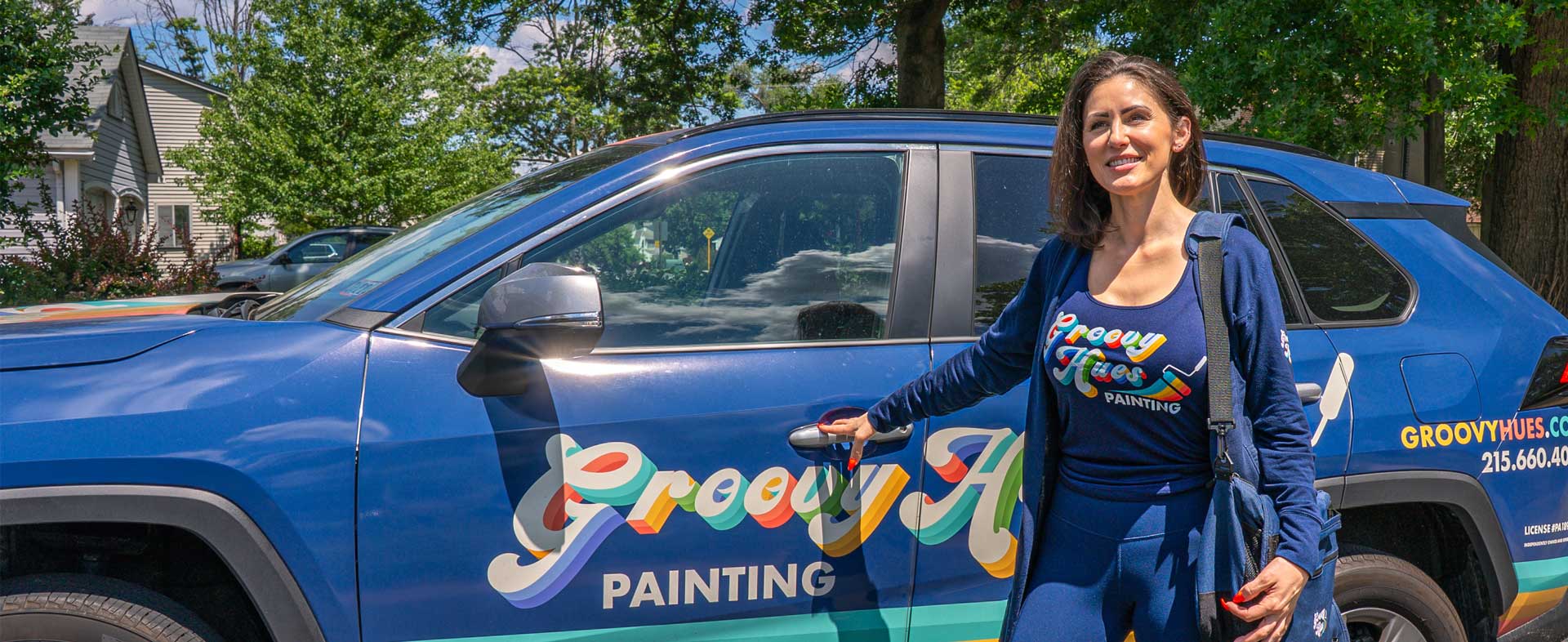
Written from the field by Groovy Hues Painting of Philadelphia — 25 years painting Greater Philadelphia, OSHA 30 · BBB Accredited · PA HIC #PA189587, 5.0 rated across 1,100+ reviews.

The Frustration of Mismatched Touch-Ups on Aged Walls
You notice a faded scuff on your living room wall, pull out your smartphone, and wonder: how accurate are digital color matching apps for historic Philadelphia plaster? The short answer is that relying on a quick scan usually ends in frustration. Attempting a quick touch-up on a damaged wall only to find the dried paint looks like a glaring, obvious patch is a headache many homeowners face. While digital color-matching apps work decently on flat, modern drywall found in newer construction, our team at Groovy Hues Painting frequently sees them struggle significantly with the unique, aged materials that give older homes their character.
The specific challenge arises in historic Philadelphia neighborhoods like Society Hill or Rittenhouse Square, where the walls have settled, faded, and developed unique textures over decades—or even centuries. These historic walls are typically made of traditional lime and horsehair plaster, a material that interacts with light and paint fundamentally differently than modern gypsum board. When you need to fix a blemish, we always advise our clients that they face a clear decision point: whether to trust a smartphone scan that treats your wall like a flat piece of paper, or rely on a professional's visual assessment for a truly seamless blend.
If you are trying to preserve the aesthetic integrity of an older home, getting the color exactly right is non-negotiable. Reaching out for professional interior painting services in Philadelphia ensures that the unique quirks of your plaster are accounted for before a single drop of paint touches the wall.
| Wall Material | Texture & Surface | How Digital Apps Perform | Ideal Matching Method |
|---|---|---|---|
| Modern Drywall (Gypsum) | Uniform, flat, predictable | Moderately accurate for rough baseline color | Digital scan followed by minor manual tweaking |
| Historic Plaster (Lime/Horsehair) | Porous, uneven, microscopic variations | Highly inaccurate; misreads shadows as dark pigment | Professional manual tinting and visual assessment |
Why Smartphone Cameras Misread Porous Plaster Textures
The underlying problem: Digital color-matching applications are programmed to read isolated pixels on a two-dimensional plane. They assume the surface they are scanning is completely flat, uniform, and evenly lit. However, 19th-century lime and horsehair plaster is incredibly porous and textured. Historic plaster absorbs and reflects light differently than standard drywall, creating a complex visual landscape that our painters find smartphone cameras simply cannot decode.
The root cause: Camera hardware limitations play a massive role in this failure. Your smartphone uses automatic white balance, image compression algorithms, and artificial intelligence enhancements designed to make photos look good, not to capture scientifically accurate color data. These built-in software corrections inherently alter the true color representation of the wall. Furthermore, the sheen and material makeup of the plaster dictate how light bounces back to the lens. If you are researching the differences between interior and exterior paint, you already know that sheen changes everything—and a phone camera cannot accurately separate a wall's sheen from its underlying pigment.
The solution: Bypassing the app entirely. In our experience restoring historic Philadelphia homes, a physical, manual assessment by a professional accounts for the ambient room lighting, the natural texture of the wall, and the specific way your historic plaster reflects sunlight throughout the day.
The Shadow Effect on Textured Walls
When you hold a phone up to an aged plaster wall in Society Hill or Rittenhouse Square, we know the camera is actually looking at microscopic texture variations. These tiny bumps and divots create microscopic shadows across the surface.
- Misinterpreted data: Apps read these tiny shadows as darker color codes rather than recognizing them as physical texture.
- Skewed formulas: The software averages the brightly lit high points of the plaster with the dark, shadowed low points.
- The frustrating result: The resulting mixed paint ends up being several shades darker and muddier than the actual wall color, making your touch-up stick out like a sore thumb.

How Philadelphia's Late-Summer Weather Alters Paint Curing
Even if an app could somehow generate a perfect digital color code, the physical environment inside an older home introduces another massive variable. Historic plaster is highly porous and retains environmental moisture entirely differently than modern gypsum board. This means the weather outside directly impacts how paint behaves inside.
During a typical late-summer August in the Delaware Valley, extreme humidity fluctuations cause historic plaster to hold onto excess moisture. Our crews see this constantly: when you apply new touch-up paint to this moisture-laden surface, it shifts how the paint cures. You might brush the paint on and think it looks like a perfect match while wet, only to watch it dry to a completely different hue over the next 48 hours. The late-summer August humidity affecting plaster moisture and paint curing is a phenomenon that our seasoned professionals plan for, but digital apps ignore completely.
Factors that alter how touch-up paint cures on aged plaster:
- Ambient room humidity: High moisture in the air slows down the evaporation of the paint's solvents.
- Plaster moisture retention: Porous lime plaster acts like a sponge, pulling moisture from the paint differently than sealed drywall.
- Room temperature fluctuations: Late-summer heat waves followed by cooler evenings cause uneven drying times.
- Ventilation levels: Older homes often have different airflow patterns, affecting how quickly the surface fully hardens.
A digital app cannot factor in regional weather conditions or material moisture levels when generating a color code. This is why partnering with experienced Philadelphia painting contractors who understand local climate nuances is essential for a flawless finish.
The Impact of Decades of Fading and Patina on True Color
Another major blind spot for smartphone matching apps is the physical aging of the walls themselves. Even if you found the original paint can in the basement and knew the exact color code used decades ago, applying that original formula today would result in a mismatch. The wall has physically changed over time.
We frequently encounter walls where decades of UV exposure from windows, natural settling of the house, and everyday wear and tear have created a unique patina. Natural fading shifts the color in ways that are entirely unique to that specific room. Apps often try to match your photo to the closest standard manufacturer color currently in their database. They do not account for 50-plus years of natural fading, smoke, cooking oils, or sunlight exposure that have subtly altered the plaster's appearance.
A successful color consultation must account for the current, real-world state of the wall, not its historical baseline. Recently, a local homeowner called us when they needed the entire interior of their house painted and realized standard swatches weren't cutting it. Our team provided a free color consultation that accounted for the home's unique lighting and aging, ensuring the project matched the home's character and was completed smoothly in less than a week without glaring color mismatches. Relying on human expertise ensures that the paint you buy matches the wall as it exists today, protecting your investment and optimizing your interior house painting costs by avoiding costly re-dos.
The Professional Advantage of Manual Tinting
The flawed digital approach stands in stark contrast to the reliable, human-led professional tinting process. At Groovy Hues Painting, our manual tinting and trained professional eye provide the only reliable solution for historic plaster. We contrast our human expertise directly against the technical limitations of digital pixel-reading because our years of experience have taught us that true color matching is an art as much as a science.
The manual tinting process used by our seasoned professionals involves testing physical samples on the actual wall. This allows the paint to dry in the room's specific lighting conditions and interact naturally with the late-summer August humidity affecting plaster moisture and paint curing. Our experts then incrementally adjust the pigments by eye, adding a drop of black here or a hint of yellow there, to account for the wall's unique texture and historic fading.
In one of our recent projects, a customer required 18 different colors and finishes matched across 14 rooms in two homes, which included complex touch-ups alongside exterior washing and drywall repair. By relying on our professional color consultation and manual matching, the result was perfectly even walls with expertly cut lines that no digital scan could ever replicate. Human expertise and a deep understanding of historic materials consistently outperform automated digital scans.
The professional manual tinting workflow:
- Initial visual assessment: Evaluating the room's natural light, the plaster's texture, and the extent of the fading.
- Baseline formulation: Mixing a starting color that closely approximates the current wall state.
- Physical test patching: Applying small amounts of the baseline paint directly to the aged plaster.
- Environmental curing: Allowing the patch to dry completely to see how the local humidity and plaster porosity affect the final hue.
- Micro-adjustments: Manually tinting the formula by eye to perfectly bridge the gap between the test patch and the surrounding wall.
Frequently Asked Questions About Plaster Color Matching
How do you match paint on old plaster walls?
The most effective method we use is professional manual tinting by an experienced painter. A physical sample must be tested on the wall and allowed to dry completely in the room's natural light. From there, micro-adjustments are made by a trained eye to account for the unique texture, porosity, and historical fading of the plaster.
Why does my touch-up paint not match the wall?
We typically see touch-up paint mismatch due to differences in natural fading, paint sheen, and application technique. Digital matches fail to account for the microscopic shadows created by porous plaster textures, causing the new paint to look too dark. Additionally, moisture levels in the wall can alter how the new paint cures, changing its final dried color.
Are smartphone paint matching apps accurate?
In our professional experience, they are generally inaccurate for textured or aged surfaces like historic plaster. Apps read isolated pixels and are easily skewed by poor room lighting, microscopic shadows, or the camera's automatic white balance. While they work best as a rough starting point for flat, modern drywall, they are not a final solution for historic homes.
Can you match paint from a picture on your phone?
Matching paint from a phone picture is highly unreliable and usually results in a poor match. Screen calibration, image compression algorithms, and ambient lighting completely distort the true color of the wall in the photograph. A physical, in-person assessment by our team is always required for an exact, seamless match.
How does late-summer humidity affect touch-up paint curing in older homes?
High humidity causes porous historic plaster to retain excess moisture, which slows down the evaporation of paint solvents. This moisture interaction shifts how the touch-up paint cures, often causing it to dry to a different hue than it appeared when wet. Digital apps cannot predict or adjust for these environmental curing shifts.
What makes historic plaster different from modern drywall for color matching?
Historic plaster is made of traditional lime and horsehair, making it highly porous and densely textured with microscopic variations. Modern drywall is perfectly flat and uniform. Plaster's uneven surface creates tiny shadows that confuse digital cameras, and its porosity affects how paint absorbs and dries, requiring a professional eye rather than a digital scan.
Secure a Seamless Blend for Your Historic Home
Smartphone cameras and digital apps simply cannot decode the complexities of historic walls. From microscopic shadows and decades of natural fading to the unpredictable ways that regional humidity affects paint curing, technology falls short of providing a flawless match. What satisfies the homeowners we work with is a clear, expert explanation of the process and a flawless, invisible touch-up that respects the home's history.
Bypass the frustration of mismatched patches and wasted weekends. By relying on local experts who understand the unique behaviors of regional materials, you can ensure your touch-ups remain completely invisible. Protect the character of your property by scheduling professional interior painting with our team at Groovy Hues Painting to guarantee a seamless blend every time.